You can chain .then() in your sleep. The interview follow-up is where it gets real.
Why does a .then() callback fire asynchronously even when the promise had already resolved before you attached the handler? Why does returning a promise from .then() flatten the result instead of handing you a promise wrapped in a promise? Build the primitive and both answers fall out for free, which is exactly what this question probes.
So we will build MyPromise end to end: the state machine, microtask scheduling, thenable assimilation, then/catch/finally, and the combinators. We will use the two APIs most "implement a Promise" tutorials predate, Promise.withResolvers() and Promise.try(), because a 2026 candidate is expected to reach for them. I'll type it in TypeScript, since generics force you to be honest about what flows through each handler.
A promise is a state machine that settles once
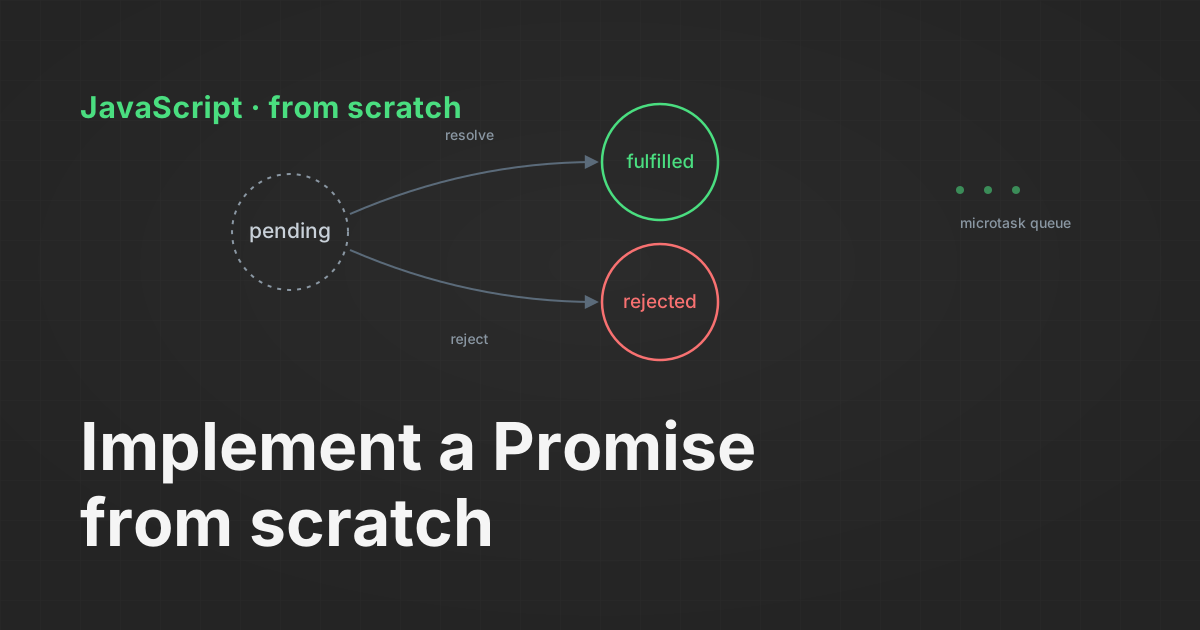
Three states: pending, fulfilled, rejected. Once it leaves pending it never moves again. That "settles exactly once" guard is the first signal an interviewer looks for.
type State = "pending" | "fulfilled" | "rejected";

class MyPromise<T> {
  private state: State = "pending";
  private value: any;
  private queue: Array<() => void> = [];

  constructor(
    executor: (resolve: (v: T | PromiseLike<T>) => void, reject: (e: any) => void) => void,
  ) {
    const settle = (state: State, value: any) => {
      if (this.state !== "pending") return;   // settle once
      this.state = state;
      this.value = value;
      this.queue.forEach((fn) => queueMicrotask(fn));
      this.queue = [];
    };
    const resolve = (v: any) => {
      if (v && (typeof v === "object" || typeof v === "function") && typeof v.then === "function") {
        v.then(resolve, reject);               // adopt thenable (flatten)
      } else {
        settle("fulfilled", v);
      }
    };
    const reject = (e: any) => settle("rejected", e);

    try {
      executor(resolve, reject);
    } catch (e) {
      reject(e);                               // sync throw in the executor rejects
    }
  }
}
Two lines carry the weight. settle bails if the state is already set, so a second resolve() does nothing. And resolve routes any thenable back through itself, which is how a resolved promise adopts another promise's outcome instead of nesting it.
Why the handler must fire asynchronously
Here is the version most people write first:
then(onFulfilled) {
  if (this.state === "fulfilled") onFulfilled(this.value); // fires synchronously
}
It looks correct, and it breaks the ordering guarantee the spec makes. A then handler always runs after the current synchronous code, as a microtask, even when the promise is already settled.
const p = new MyPromise((r) => r(1));
p.then(() => console.log("handler"));
console.log("after then");
// spec order:      after then, then handler
// the buggy code:  handler, then after then  (wrong)
The fix is to never invoke a handler inline. Queue it while pending, and flush the queue through queueMicrotask on settle. Microtasks run after the current task finishes but before the event loop yields to the next render, which keeps ordering deterministic.
then returns a new promise, and that is the whole trick
then returns a brand new MyPromise that starts pending, even when the source is already settled.
then<R>(onFulfilled?: (v: T) => R | PromiseLike<R>, onRejected?: (e: any) => any): MyPromise<R> {
  return new MyPromise<R>((resolve, reject) => {
    const run = () => {
      const cb = this.state === "fulfilled" ? onFulfilled : onRejected;
      if (typeof cb !== "function") {
        // no handler: pass the settlement through
        this.state === "fulfilled" ? resolve(this.value as any) : reject(this.value);
        return;
      }
      try {
        resolve(cb(this.value));   // resolve() flattens a returned thenable
      } catch (e) {
        reject(e);                 // a throw rejects the next promise
      }
    };
    this.state === "pending" ? this.queue.push(run) : queueMicrotask(run);
  });
}
The flattening lives entirely in resolve from the constructor. If a handler returns a thenable, we adopt its state instead of wrapping it, which is why long chains stay flat.
catch is not special, and saying so out loud scores points: it is then(null, onRejected). And finally runs its callback but forwards the original value or reason untouched, so it can never swallow a result or hide a rejection.
catch(onRejected: (e: any) => any) {
  return this.then(undefined, onRejected);
}

finally(cb: () => void) {
  return this.then(
    (v) => { cb(); return v; },
    (e) => { cb(); throw e; },
  );
}
The combinators are just completion counters
all fulfills with an ordered array or rejects on the first rejection. The trap is ordering: results have to land by index, not by arrival time.
static all<T>(items: MyPromise<T>[]): MyPromise<T[]> {
  return new MyPromise((resolve, reject) => {
    const results: T[] = [];
    let done = 0;
    if (items.length === 0) return resolve(results);   // empty iterable fulfills now
    items.forEach((item, i) => {
      item.then((value) => {
        results[i] = value;                            // by index, never by order
        if (++done === items.length) resolve(results);
      }, reject);                                       // first rejection wins
    });
  });
}
The other three share the shape with a different settle condition. race settles as soon as the first input settles, either way. any fulfills on the first success and rejects with an AggregateError only when every input fails. allSettled never rejects; it maps each input to a { status, value } or { status, reason } object. Write all and you have written all four.
The 2026 refactor: stop hand-rolling deferreds
Older tutorials reach for the "deferred" pattern when the resolver has to escape the executor scope, say for an event-driven queue:
let resolve, reject;
const promise = new Promise((res, rej) => { resolve = res; reject = rej; });
That leaks let bindings and a closure just to move two functions out. Promise.withResolvers() returns them directly:
const { promise, resolve, reject } = Promise.withResolvers<string>();It reached Baseline newly available on 2024-03-05 (Chrome 119, Firefox 121, Safari 17.4) and is projected widely available on 2026-09-05.
The other trap is subtler. A utility that runs a user-supplied callback this way silently loses synchronous throws:
function run<T>(cb: () => T) {
  return new Promise<T>((resolve) => resolve(cb())); // if cb() throws sync, it escapes
}
The throw happens before resolve is even reached, so it propagates out of run instead of becoming a rejection. Promise.try(), Baseline since 2025-01-07, closes the hole and forwards arguments too:
function run<T>(cb: () => T) {
  return Promise.try(cb); // sync throw becomes a rejection; paths behave alike
}
What this actually demonstrates
Building the primitive is not busywork the interviewer invented to watch you sweat. Each piece maps to a claim about your mental model: the settle guard says you know a promise is a one-way state machine, queueMicrotask says you know where promise callbacks sit in the event loop, and the thenable branch says you know why chaining flattens.
Write it by hand once and .then() stops being a black box. Then land the part most candidates miss: the idiomatic 2026 answer no longer hand-rolls a deferred, and it treats new Promise(r => r(cb())) as a bug waiting for a synchronous throw.